


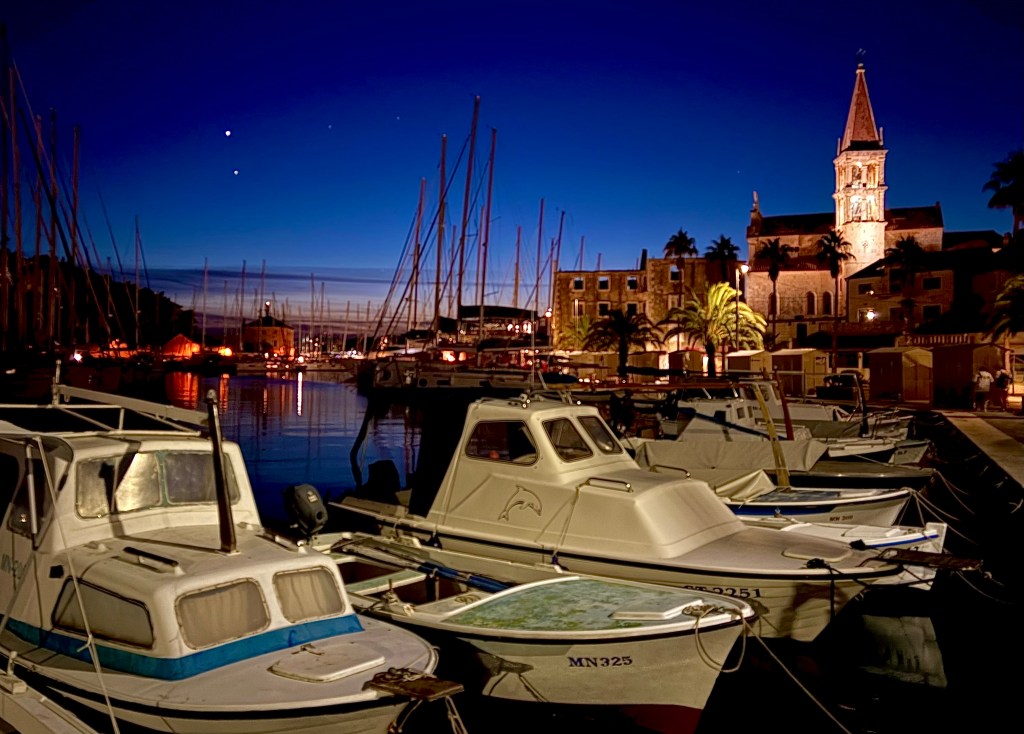
During my summer hiatus from backpacking in Central Florida, I’ve decided to spend the next several weeks posting about the towns and islands my family and I visited during our weeklong sailing trip in June on the Dalmatian Coast of Croatia. If you’re interested in learning more about what it’s like to charter a sailboat in the Adriatic (including costs of renting a sailboat and hiring a skipper), check out my latest article in Go World Travel, “Why a Croatian Sailing Charter is the Perfect Family Vacation.”
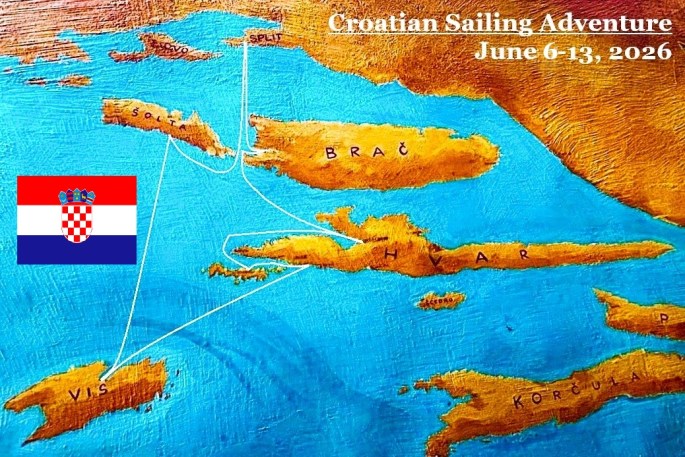
This week, I’ll discuss Milna on the island of Brač.

The night we spent at Milna in Brač was our final at a seaside village before we returned to Split. It was also a last-minute surprise, as we were compelled by weather—like many other boaters that evening—to retreat to its harbor on the northern side of the island to shelter from expected afternoon storms, rather than anchor at one of the island’s scenic beaches on the southern coast. But we were hardly disappointed by what we found there.
Brač is the largest island in the Dalmatian Archipelago (third largest in the Adriatic Sea) and the most rugged, with 2,500-foot Mount St. Vid plunging to the island’s southern shore on steep slopes that have been embraced for centuries by wine growers. Brač is also famous for its white limestone, which was used to build Diocletian’s famous 4th century Roman Palace in nearby Split. As with the other islands on the Dalmatian Coast, rule over Brač passed back and forth over the centuries among the rival empires that vied for control of the Adriatic. The village of Milna, now home to approximately 1,000 of the island’s 14,000 residents, was the only one on the island to be bombed during Croatia’s War of Independence in 1991.
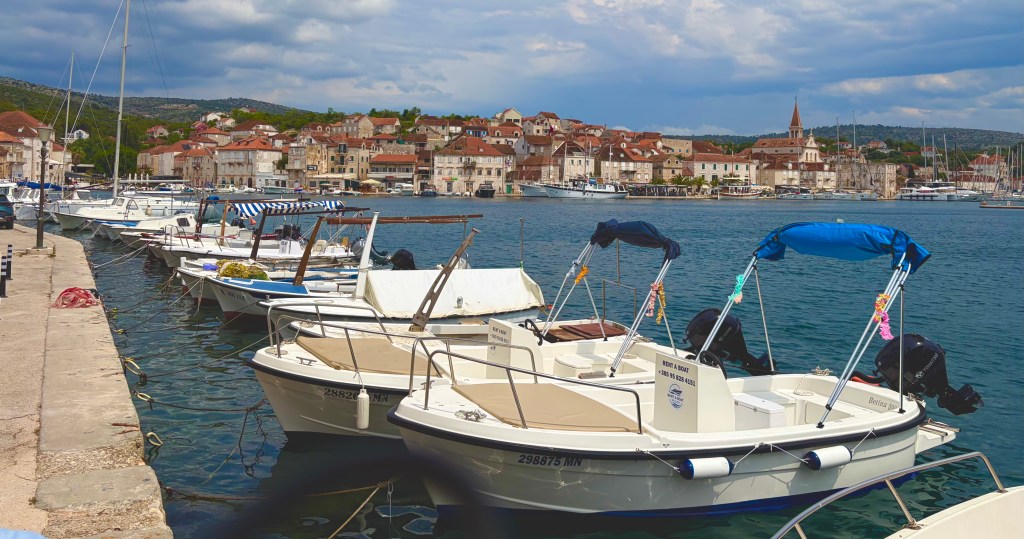
Although we had not expected to visit Milna, we were pleasantly taken in by its small town charm, and even now, we often confuse the photos we took there with the ones we took in Stari Grad the day before. A seemingly endless riva wrapped around the neck of the harbor’s southern, eastern, and northern shores, which was understandably popular with joggers. And with the harbor facing west again, we were treated during another fine dinner downtown to a spectacular sunset.
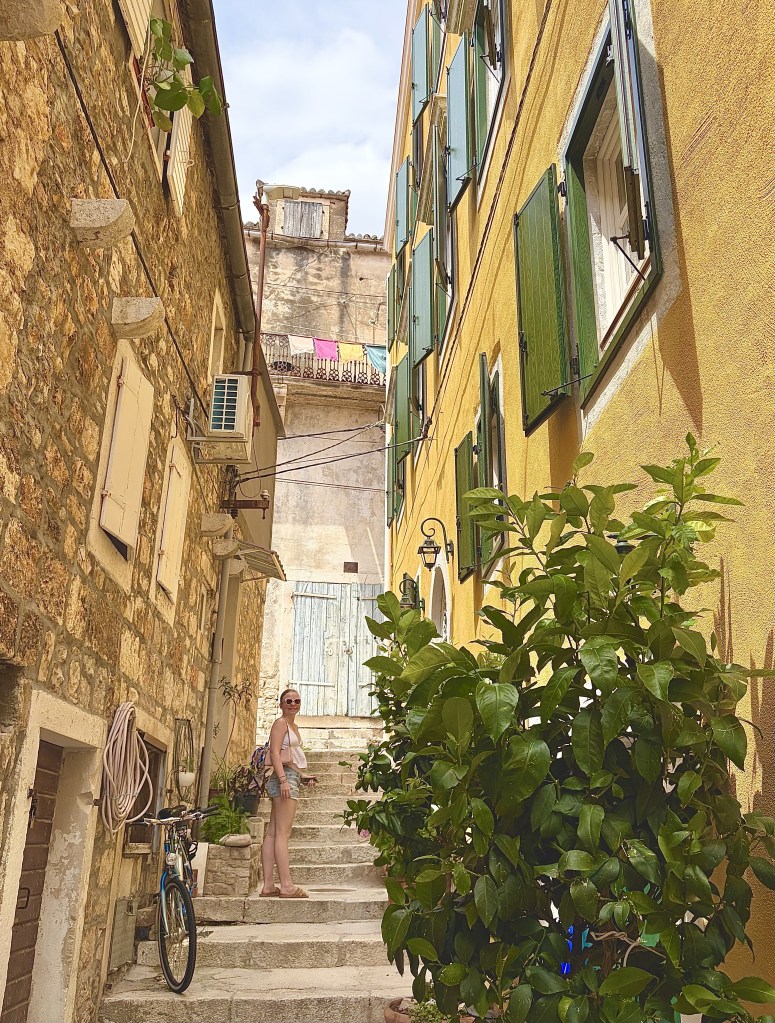
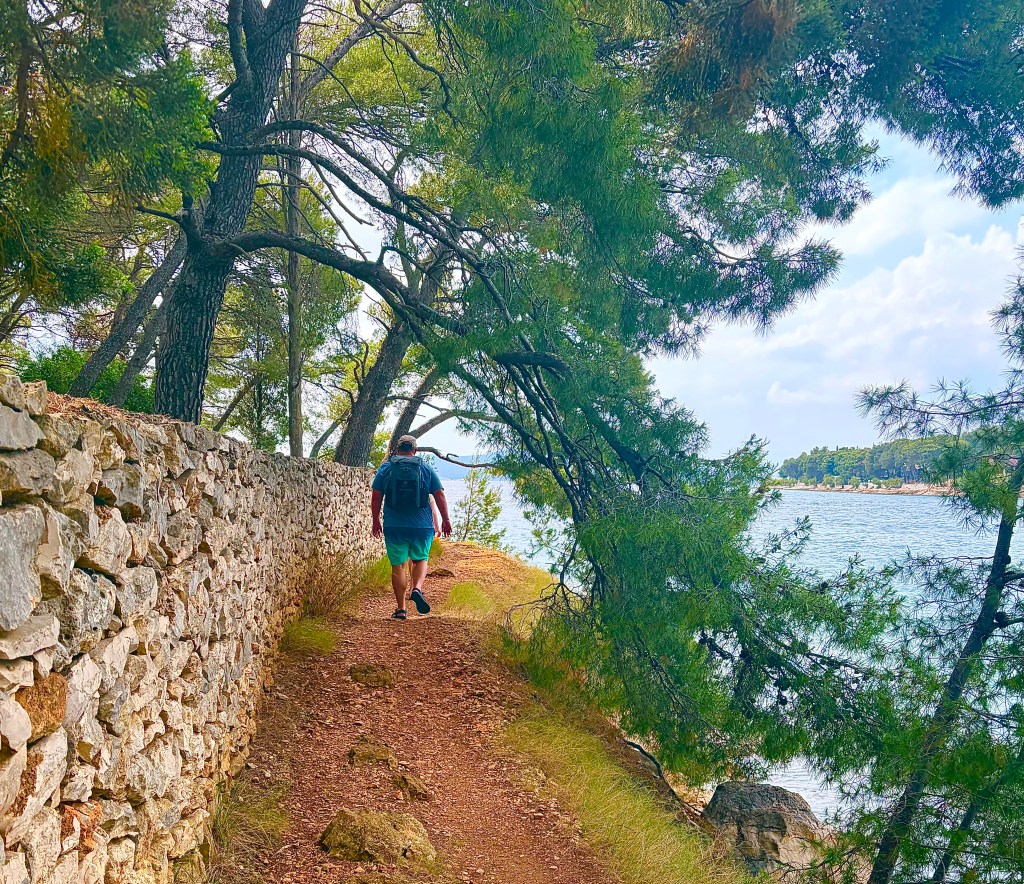
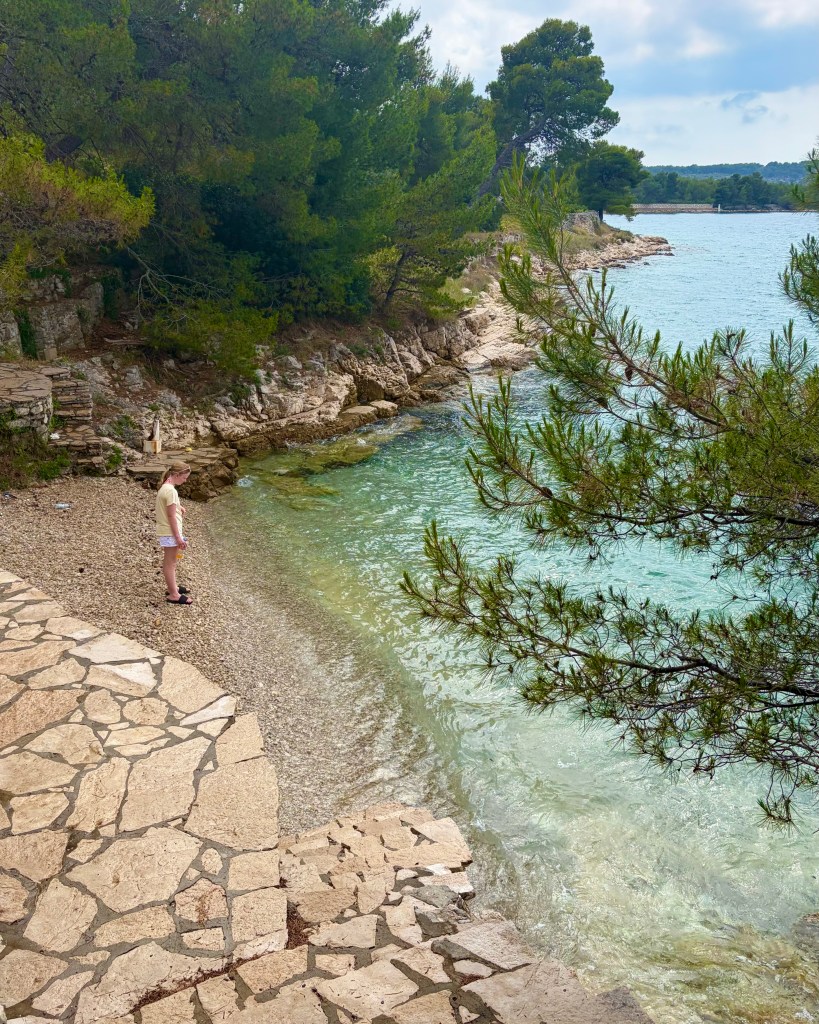
Compared to Stari Grad, the alleys back from the harbor were steeper and therefore harder to talk our tired legs into climbing. But the highlight of our afternoon there came when we walked to nearby Hana Beach. Shortly after passing a marina, our path along the bay poured into a coastal forest, then took us along an old stone wall like those we saw on many windswept shores from our sailboat earlier in the trip. We eventually reached a secluded pebbly beach with a carved terrace for sunbathing nestled into a corner of the woods, and although recent visitors had left more litter than the beach deserved, its beauty was jaw-dropping.
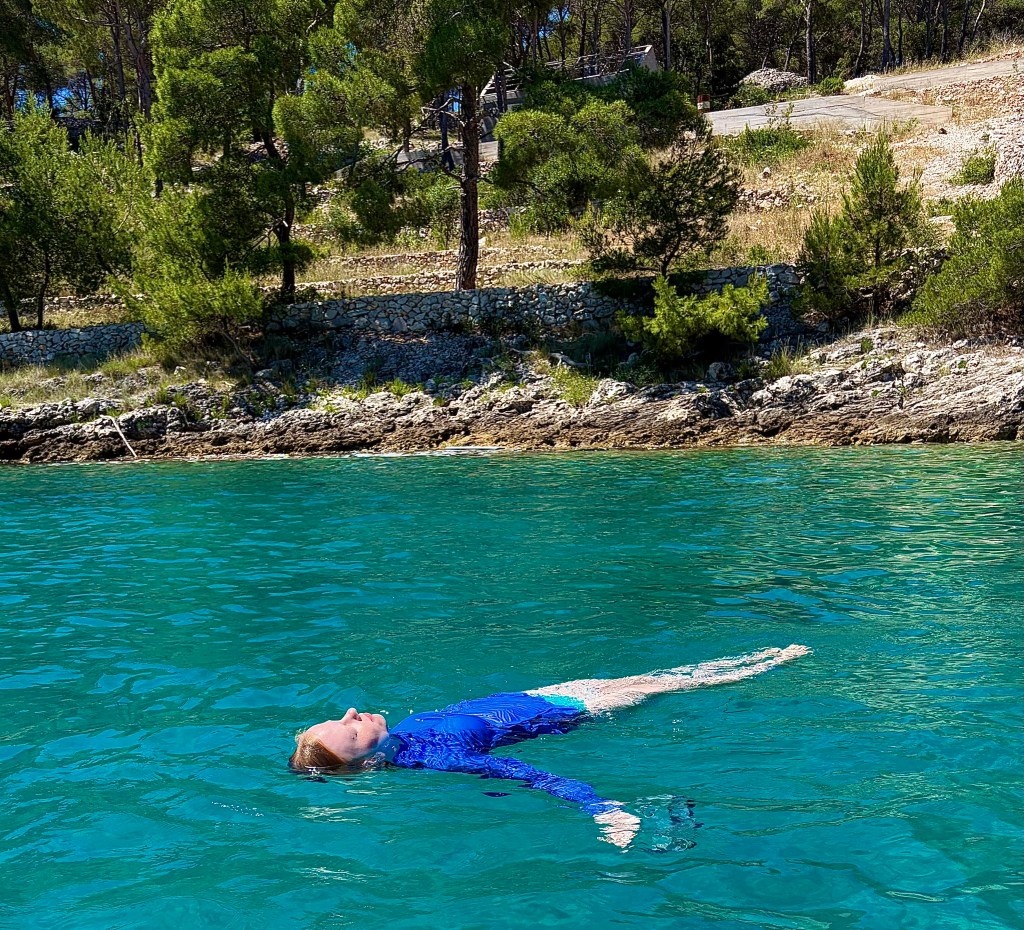
One of the highlights of our trip was the short stop we took on our way out of Milna at a quiet cove near the mouth of the bay, where we anchored and swam for our last two hours before returning to Split. Here we were treated to a taste of what we might have seen had we anchored as planned the night before on Brač’s southern coast. With no other boats, houses, or other signs of civilization in sight, my girls and I relished swimming in the crystal-clear waters and paddling to shrubby, rocky shorelines one final time.
If you travel to Brač during a vacation in the Dalmatian Archipelago, chances are you won’t spend a day in Milna. But you’ll be pleasantly surprised if you do.
Discover more from Central Florida Backpacking Desk Jockey
Subscribe to get the latest posts sent to your email.
