


After several weeks of not posting here, I am thrilled to return by raving about a recent once-in-a-season chance I had to backpack for a night in one of the most beautiful national parks east of the Mississippi River. Shenandoah National Park is the Hope Diamond of Virginia and a magical place to spend a night on the trail in a wonderland of rusting trees during the fall. I kicked off this backpacking season with a one-nighter in Shenandoah last Thursday before scouting a University of Virginia football game for the Pop Tarts Bowl, and I dream of the day when I’ll be able to return there.
Opened in 1935, Shenandoah National Park covers an almost 200,000-acre ribbon of the Blue Ridge Mountains in central Virginia east of the Shenandoah River, with southern portions of the park less than an hour from Charlottesville and northern portions less than 2 hours from Washington, D.C. It is perhaps most famous for Skyline Drive, a breathtaking 105-mile scenic highway built by the Civilian Conservation Corps during the Great Depression. It is also home to 101 miles of the Appalachian Trail, much of which runs parallel to Skyline Drive and can easily be accessed from its rest stops. (In fact, portions of Skyline Drive were built atop stretches of the original AT, which had to be relocated and rebuilt by the CCC further down adjacent mountains slopes.)
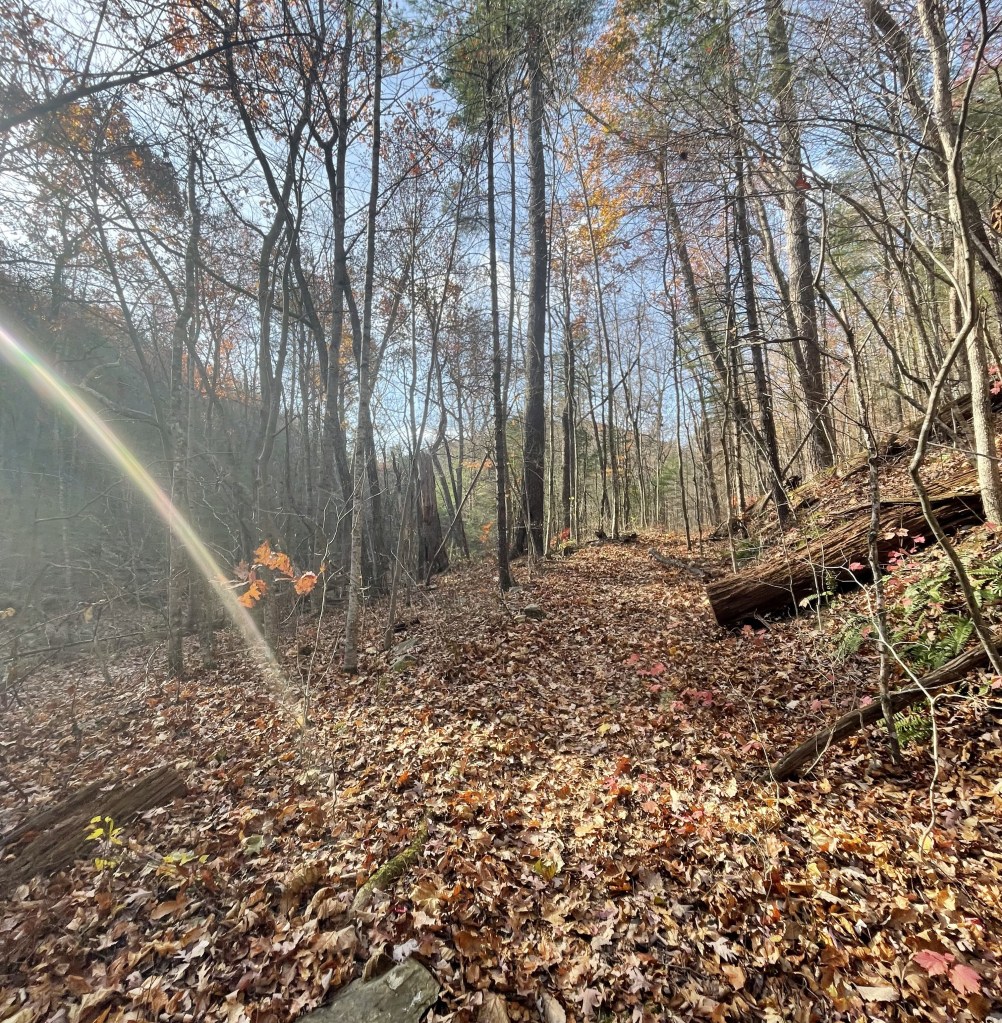
For middle-aged flatlanders like me who don’t have the time or the stamina to take on long sections of the Appalachian Trail, Shenandoah National Park is an excellent place to taste backpacking on the AT for a weekend. It has more than 500 miles of trails, including many loops that include portions of the AT. They are easily reached, well-blazed, and include posts at intersections listing distances to nearby points of interest. The park’s website also lists Suggested Backcountry Trips categorized by difficulty of terrain and camping experience level, although you’ll also want to use other resources like AllTrails to learn more about expected elevation gain. You’ll also need to print or download maps on your phone before you go, as reception is non-existent in many backcountry areas.
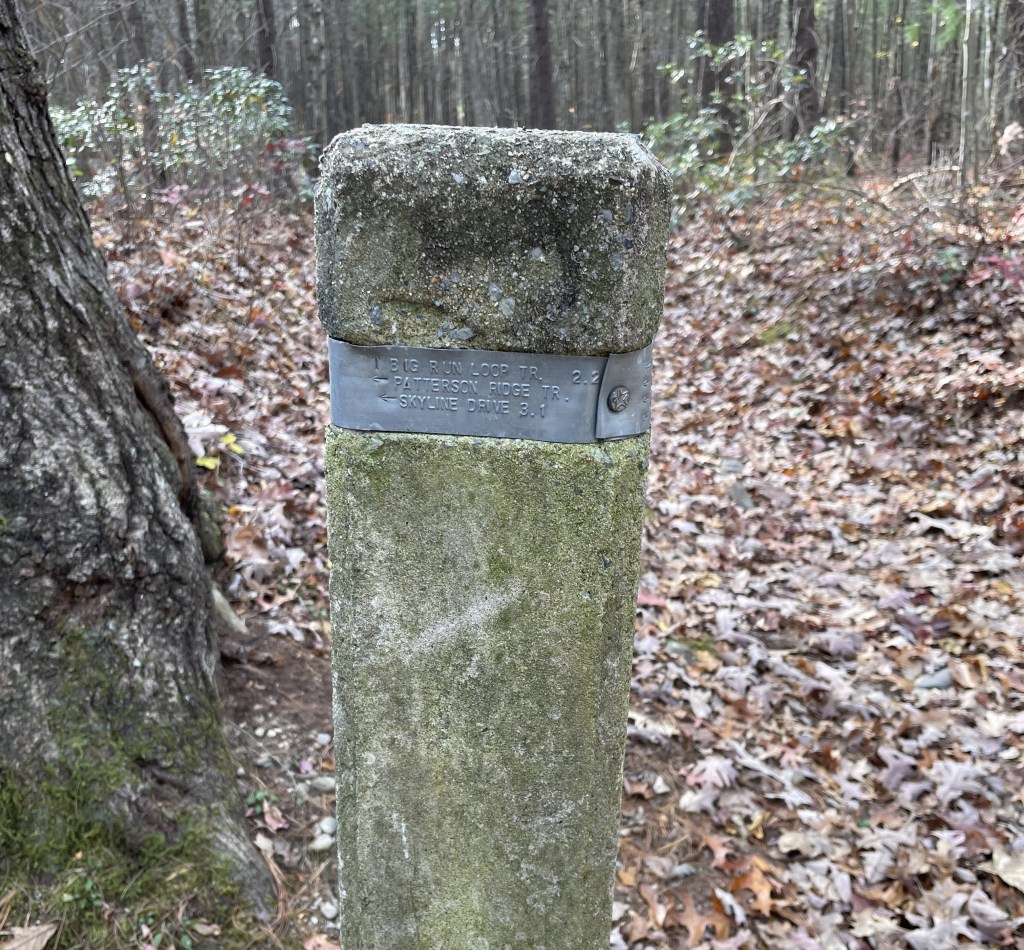
Because I had only one night and was driving to Shenandoah from Charlottesville, I chose to piece together my own 14-mile loop beginning at the Doyles River parking area near Mile Post 82 on Skyline Drive. My chosen route connected portions of the AT, Big Run Loop Trail, Big Run Portal Trail, and Patterson Ridge Trail, although I sadly had to trade my final three-mile stretch on the AT on Day 2 for an improvised 1½-mile road walk on Skyline Drive after destroying my legs on my 1,700-foot ascent out of the valley where I camped. But I still had a blast.

Having arrived in the first weekend of November after the autumn chill had sent the ticks into hibernation, I was treated at overlooks to panoramas of mountaintops covered in brown, yellow, orange and red, before hiking down into a valley where most of the leaves had already fallen. This was dispersed camping at its finest, and I found a pristine spot for my tent not far from Big Run, a cascading boulder-strewn creek with pools that are popular in the summer with trout anglers. With high ridges blocking the lights and sounds of civilization to the east, I spent the night gazing at stars from my tent, although I was shivering a bit.

Fall is also a pleasant time to visit Shenandoah because the summer crowds are gone. Although I did see plenty of day hikers and several backpackers at the trailheads, Skyline Drive itself was nearly empty, and the many roadside pull-offs offered serene views of the surrounding peaks and valleys.
Backpacking in Shenandoah National Park requires a backcountry permit ($9 per backpacker per night plus a $6 reservation fee; maximum of 14 nights), which is in addition to the park’s entrance fee. The permit must also be printed before you arrive and can’t be modified once it’s printed (you’ll need to select one of the park’s backcountry camping zones when purchasing your permit). You’ll also need to stock up on all food and camping supplies before you arrive, as most of the shops and eating locations within the park are closed for winter by the end of October. There are also not many places to shop (even gas stations) near the park’s southern entrance off Interstate 64. But if you have an extra day or two while visiting Charlottesville or Washington, D.C., I definitely recommend trying the trails at Shenandoah National Park.

Discover more from Central Florida Backpacking Desk Jockey
Subscribe to get the latest posts sent to your email.
