


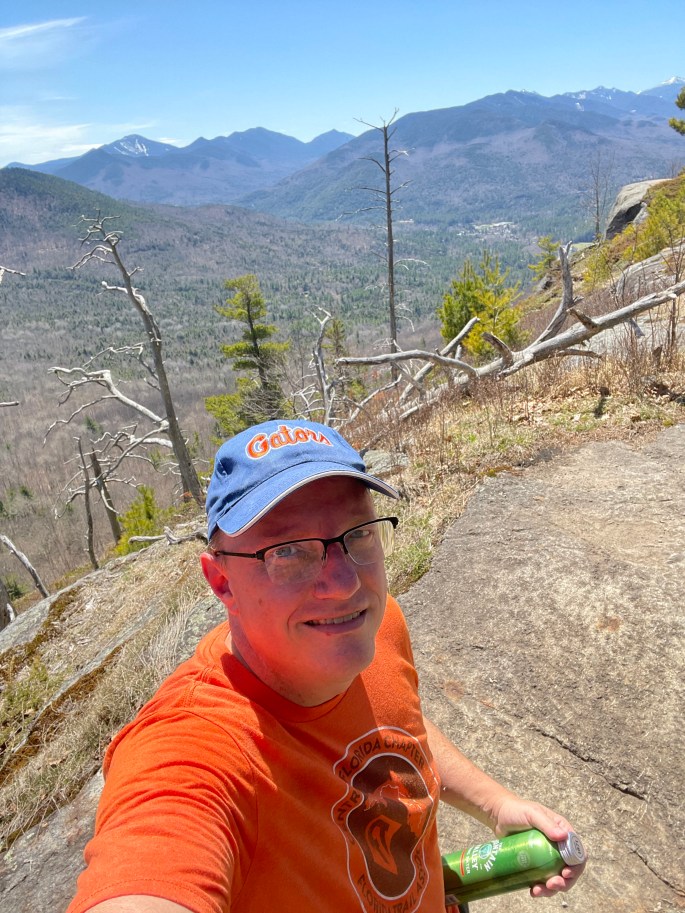
Earlier this week I posted about my week at the Craigardan Spring Writers Retreat, at a working farm and artists community nestled in the eastern Adirondack Mountains just outside Elizabethtown, New York. But I did not share any details or many photos from the hiking I did there or about how the entire area lies in one the nation’s largest state parks. As these photos illustrate, Adirondack Park is a special place to hike and backpack.
Adirondack Park is the nation’s largest contiguous region of protected land in the United States, covering an area larger than Yellowstone, Yosemite, Grand Canyon, and Glacier National Parks combined. It was established in 1892, after backlash from the stripping of the forests by lumber interests prompted New York to amend its state constitution to require that millions of acres within the Adirondack Mountains “be forever kept as wild forest lands.” It is not like most state or national parks, as many towns (more than 100), farms, tourist areas, and permanent homes exist within the park, with two separate state agencies balancing and regulating private and public uses. But the inclusion of towns within its boundaries has made many consider it one of the nation’s most successful experiments in land preservation.

It is also a mecca for backpackers and hikers. With more than 40 mountains higher than 4,000 feet, it attracts outdoor enthusiasts from all over the country, including climbers aspiring to join the Forty Sixers club of hikers who have scaled the 46 highest peaks. (They were once believed to all be over 4,000 feet, before surveys confirmed that four are actually just under that height, but who’s counting.)

I did not attempt to climb any of the big mountains during my week in the Adirondacks—I failed to reach even low summits on the only two hikes I had time to try, and my Florida flatland legs pooped out before I made it to the top of either trail. So I can hardly profess to be an authority on Adirondack Park. But my tiny taste of two of its shorter trails hints at the pleasure you might find if you go there.
Both of my hikes began at trailheads on New York State Route 9N just west of Craigardan’s farmhouse outside Elizabethtown. On the day I arrived in New York, I took a crack at climbing Baxter Mountain, making it a bit more than 1 mile up the 1.5 mile trail to the summit before breaking for lunch and turning around when compelled by tired legs and the willies I got when approaching cliffsides. I then made it up about 2 miles of the 2.6-mile Owl Ridge Trail the day before I flew home, before once again turning around because of old man legs and limited time.
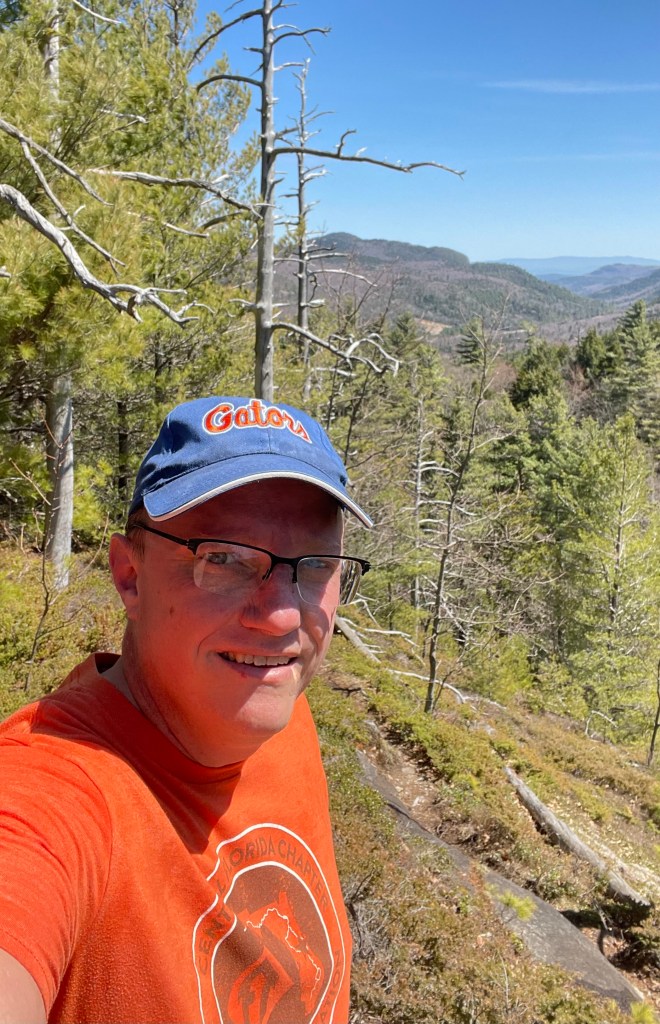
The hike up the Baxter Mountain trail provided pretty mountain views that Floridians like me rarely see, especially since the sunny, cloudless weather allowed me to see peaks in the distance still covered with snow. That was the harder of the two trails, with the second half-mile requiring a bit more climbing with at least one extra point of contact on boulders and steep hillsides, and it was at times hard to find blazes (circular metal tags affixed to trees) amid well-trodden side trails. Of course, the silver lining was that I was able to enjoy lunch on a boulder near the summit with panoramic views of the valley and distant peaks.

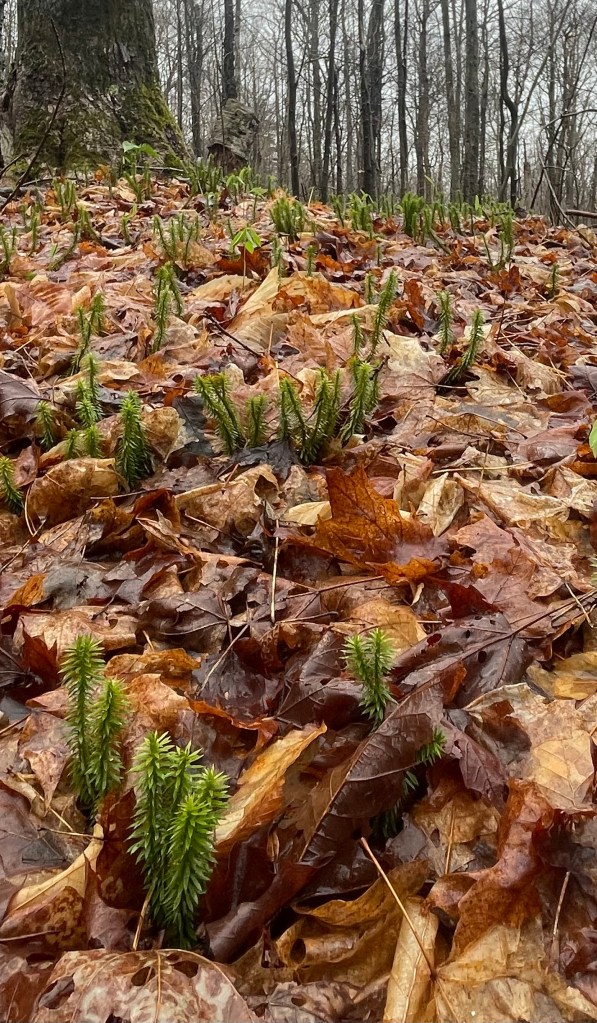
The Owl Ridge Trail was much more forested, but it was the right trail for the rainy, foggy weather that accompanied me. The trail ran beside and frequently crossed a pretty brook as I climbed up toward the peak of Giant Mountain. Amid the still barren deciduous trees and fallen leaves still painted orange and red, I was able to spy new saplings sprouting from the forest floor. Despite the rain and occasional mud, this trail was a bit easier on the climbs and descents than the Baxter Mountain trail, and the rocks were much less slippery than I expected.
Because of my busy schedule at the retreat, I was never able to sleep in my tent (even though I took all of my gear with me), so I have precious little advice on backpacking. But the attached link contains details on great places within the Adirondacks for backcountry adventures, including details about where to camp and restrictions on campfires. If I can get my legs in shape for terrain in three dimensions, I’ll definitely try to return one day with my tent and backpack.

Discover more from Central Florida Backpacking Desk Jockey
Subscribe to get the latest posts sent to your email.
