


As temperatures rise here in Central Florida, I am reminded that there are great places further north to enjoy the outdoors. Like the Florida Trail, Wisconsin’s Ice Age Trail is one of three national scenic trails located entirely within a single state, and its western terminus is located along the St. Croix River only one-hour’s drive from Minneapolis. I did an 11-mile one-night backpacking trip there in late October when the leaves were changing and the cold began to bite. But the St. Croix River and the Ice Age Trail are much more popular in the summer, and if you plan to travel to Minneapolis this summer, I recommend backpacking or canoeing on the St. Croix River.

The Ice Age Trail was established in 1980 and stretches 1,200 miles across Wisconsin from the St. Croix River to Lake Michigan. It was established to preserve unique landscapes created when the last glaciers retreated from Wisconsin 10,000 years ago. Marked with yellow blazes, the Ice Age Trail passes near most of Wisconsin’s cities, including Milwaukee and Madison. The western terminus near Minneapolis is in the northwest corner of Wisconsin and offers the added bonus of the St. Croix River. Like the Florida Trail, the Ice Age Trail is well-maintained by an association of dedicated volunteers.
Formed when glacial Lake Diluth catastrophically failed during the most recent ice age and sent torrents of boulder-strewn meltwater cutting a valley south through billion-year-old volcanic basalt, the St. Croix River is best known as a destination for kayakers, canoers, and fisherman who spend summer weeks coasting down its peaceful currents and staying at riverside campsites. Many of those can be reached only by water, and the area seems to have been relatively overlooked by backpackers. But the westernmost 9 miles of the Ice Age Trail pass through the St. Croix National Scenic Riverway, and I was lucky enough to stay at the campsite beside the river in Lions Park, just 8 miles from where the western end of the Ice Age Trail begins.

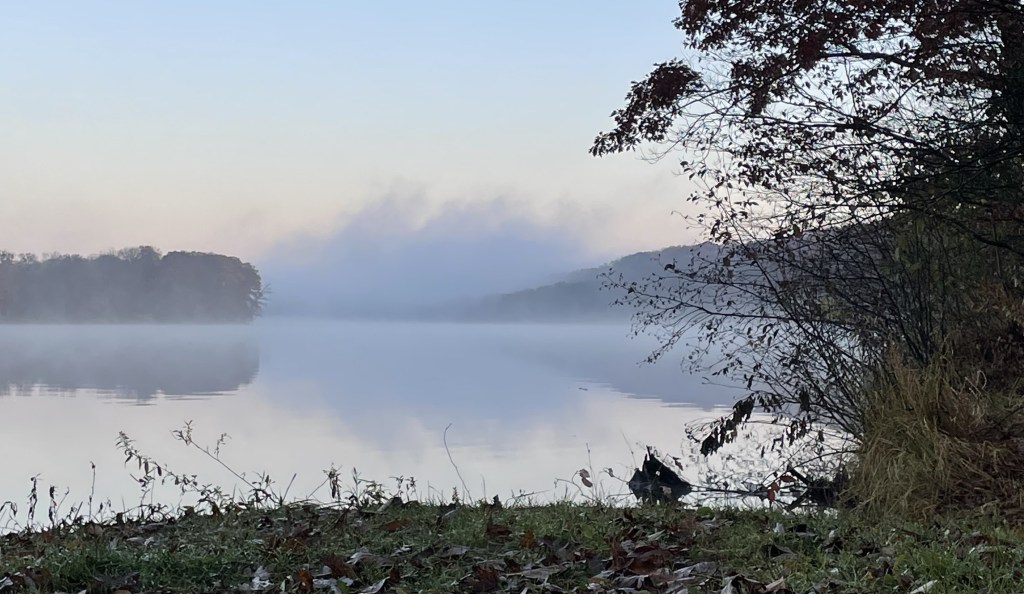
A highlight of my trip was camping beside the St. Croix River. The night sky was blanketed with stars, and I enjoyed a gorgeous sunrise beside the glassy river and its dusting of morning fog. The campsite was quaint and not set back from the trail (a local jogger passed by my tent and said hello as I had breakfast), but it sits at the water’s edge—even the sign for the campsite faces the river. It also has a drop toilet and a sturdy picnic table and fire ring and is free to use on a first-come-first-serve basis. There was space there for several tents beside the river.
The campsite is 7.3 miles up the Ice Age Trail from the interpretive center of Interstate Park (called “Interstate” because it straddles the river in both Wisconsin and Minnesota (it has nothing to do with highways)). Interstate Park lies just south of St. Croix Falls, a gateway town for the Ice Age Trail. Although I had planned to park overnight at Interstate Park and take an Uber to a trailhead 3 ½ miles from camp, then hike the 7.3 miles back to my car at Interstate Park the next morning, I learned upon arriving that St. Croix Falls is “too small for Uber.” But my adventure was saved by a friendly volunteer at Interstate Park named Carol (also a member of Ice Age Trail Alliance), who was nice enough to drive me through town to my preferred trailhead and even gave me trail tips and weather updates.
The trail is well maintained with sturdy bridges and boardwalks over wet stretches south of the campsite (toward the western terminus), then ranges up and down boulder strewn forested canyons in nature preserves and beside farms, before eventually skirting the woods beside the town of St. Croix Falls and spending approximately two miles on neighborhood roads. This stretch also offers a taste of hills and surprised me with almost 750 feet of elevation gain in the 7.3-mile hike out.

I also skipped most of the steep last 0.7-mile stretch of the Ice Age Trail inside Interstate Park and instead drove from the interpretive center to a parking lot about ¼ of a mile uphill from the Ice Age Trail’s western terminus, at a breathtaking cliff overlooking the St. Croix River. The western terminus looks down on the Dalles of St. Croix, a narrow canyon where the world’s largest log jam occurred in 1886.
Excellent trail information can be found at the Ice Age Trail Alliance’s website at www.iceagetrail.org. According to the website, overnight parking along this section of the Ice Age Trail is limited to Interstate Park’s interpretive center (you’ll have to pay their entrance fee), so an out-and-back from Interstate Park is the best option if you’re solo backpacking or have only one vehicle. 3 Arrows Coffee Co., located along the Ice Age Trail one half-mile from Interstate Park, serves delicious grilled cheese sandwiches, sweets, and coffee and welcomes backpackers with indoor and outdoor seating.
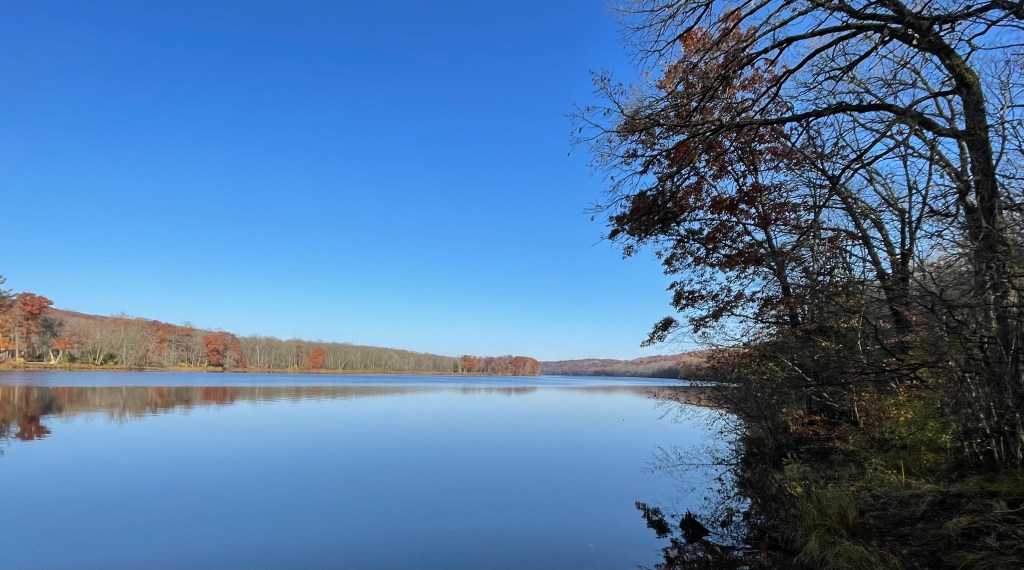
If you’re looking for an easy one-night backpacking or canoeing trip in forested northern river country near Minneapolis, this stretch of the Ice Age Trail is definitely worth a visit.
Portions of this article were borrowed from an article of mine in the November-December 2024 issue of The Footpath Newsletter published by the Central Florida chapter of the Florida Trail Association.
Discover more from Central Florida Backpacking Desk Jockey
Subscribe to get the latest posts sent to your email.
